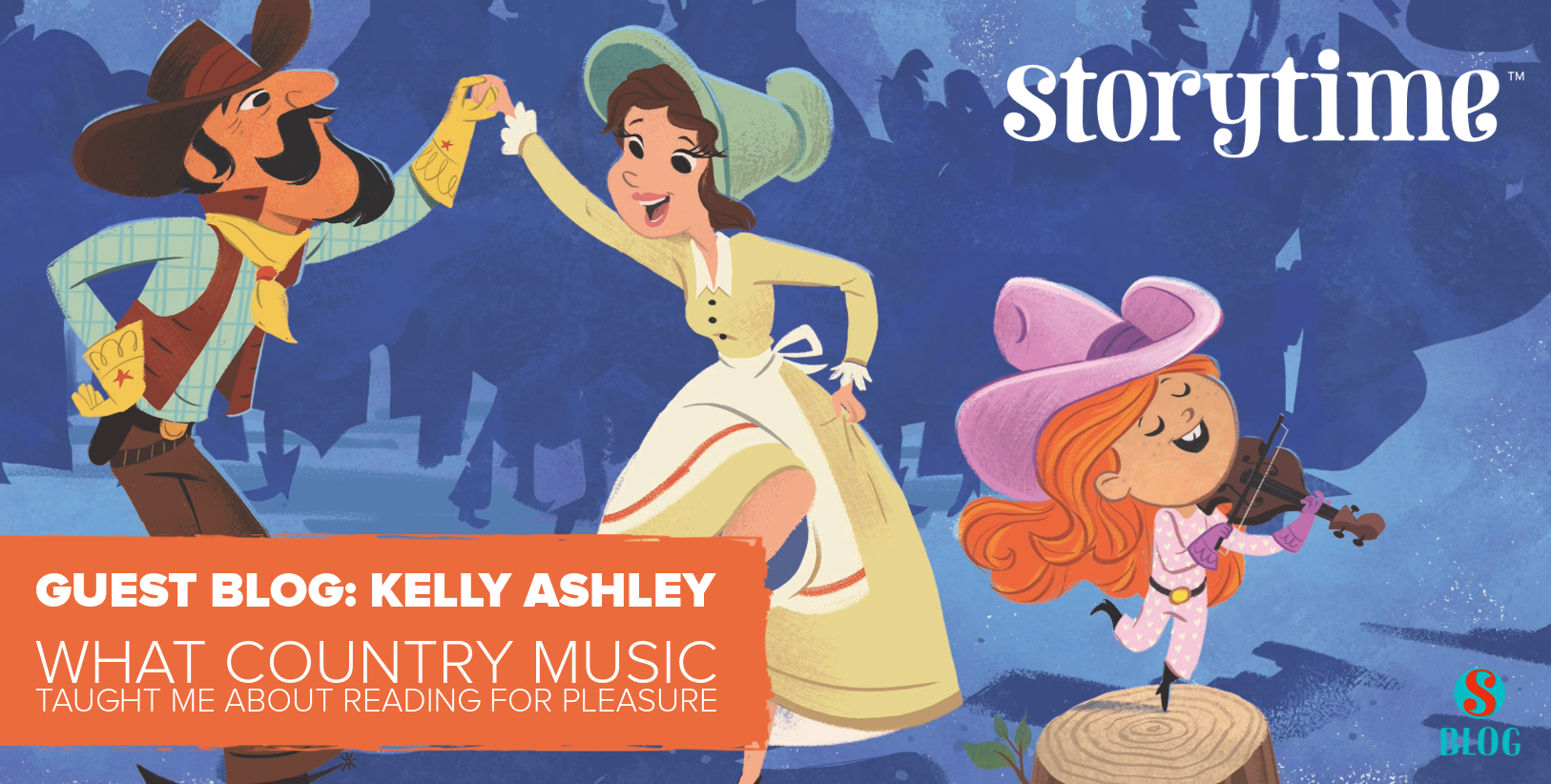
‘Three Chords and the Truth’
What Country Music Taught Me About Reading for Pleasure
By Kelly Ashley, Lecturer in RfP for The Open University
Growing up in the southern USA, I was raised on country music as ‘three chords and the truth.’ Simple, heartfelt and real — this is what gives this particular genre of music its power. Those simple songs about small towns, big dreams and hope taught me something: it’s not complexity that moves people, but connection.
And that’s true of reading, too. The most powerful reading experiences aren’t about test scores or targets — they’re about feeling something. At its heart, building a culture of RfP in schools is about stringing these emotional chords together to build lifelong readers through connection, choice and community.
Chord 1: Connection — Feel it to believe it
A good country song makes you feel — joy, laughter, heartbreak, belonging. Reading works the same way. Children and young people become readers when texts reach them on a personal level.
Recent research from The Open University (Cremin et al., 2026) highlights the importance of emotional connection and agency in sustaining children’s motivation to read. When reading is positioned as relational — rooted in joy, curiosity and choice — young people are more likely to read voluntarily, talk about their experiences and identify as readers within and beyond school. National and international surveys continue to show a worrying decline in children’s reading enjoyment, but research reminds us that change begins locally — in classrooms that prioritise connection, autonomy and community.
So how do we turn this picture around? We can start by helping children find books that speak to their lives — stories that mirror who they are or open windows to new worlds. We can share our own adult reading lives, too. When adults talk about what they’re reading or share a favourite childhood book, young people see that reading isn’t a task; it’s part of who we are.
Just like a songwriter sharing truth from the heart, it’s authenticity that strikes the chord and sparks that first flicker of reading interest.
 Chord 2: Choice — Let readers find their rhythm
Every great song has its own unique rhythm, and every reader needs to find theirs, too. Giving children the freedom to choose what to read, where to read and who to read with can strike a lasting chord. Choice fuels motivation, ownership and joy.
Whether it’s a comic, magazine, fantasy novel, sporting biography or a recipe book — it all counts. The theme of the National Year of Reading 2026, ‘If you’re into it, read into it: go all in,’ captures this perfectly.
When readers see their interests reflected and respected, they develop confidence and positive self-assurance. For adults, it’s not about controlling the playlist, but expanding it. Our role is to introduce new tracks and titles that keep them turning the page.
Chord 3: Community — Reading as a shared experience
Country music thrives on community — the feeling that everyone’s part of the story. Reading for pleasure flourishes in the same way.
When classrooms hum with book chat, adults and children read aloud regularly and environments celebrate readers’ choices, reading becomes social, visible and valued.
Truly social and interactive reading environments give a school’s reading culture its rhythm. They help children see that reading isn’t just a solitary act; it’s something that connects us.
When pupils talk about their reading experiences — what made them laugh, what surprised them or why they loved a particular fact — they’re doing more than swapping opinions. They’re practising empathy, curiosity and communication. That’s the heartbeat of a reading community.
 The truth of it
So, what did country music teach me about reading for pleasure? That the best stories — whether sung or read — tell the truth. They help us see ourselves and others more clearly. They stick because they make us feel.
Creating reading-rich classrooms doesn’t need to be complicated. It’s about tuning those three powerful chords: connection, choice and community — and playing with honesty and heart. As Cremin and colleagues (2014, 2026) argue, authentic reading cultures grow from the inside out — when teachers know their readers, share their own reading lives and build strong, connected communities.
When schools make time for RfP, celebrate all forms of reading and give children and young people ownership within the environment, something magical happens. The atmosphere changes. Reading starts to sing.
Whether it’s ‘three chords and the truth’ or three chords and the joy, what really matters is that we make reading feel real for everyone. When classrooms hum with connection, choice and community, reading isn’t just something we do — it’s who we are.
References
Cremin, T., Mottram, M., Collins, F.M., Powell, S. and Safford, K. (2014) Building Communities of Engaged Readers: Reading for Pleasure. London: Routledge.
Cremin, T., Hendry, H., Chamberlain, L. and Hulston, S.J. (2026) Reading and Writing for Pleasure: An Evidence-Informed Framework for Practice. London: Routledge.
About the author
Kelly Ashley is a literacy educator, researcher and lecturer in RfP for The Open University. She works with primary and secondary schools across the UK and abroad to strengthen reading for pleasure knowledge and practice. Find out more about the work of the OU RfP team at https://ourfp.org.