Archive for the ‘Inside Stories’ Category

Communication is a Gift

Communication is a Gift

The latest issue of Storytime features a wonderful tale about Paige, a girl who goes in search of an unidentified flying object. Paige happens to use British Sign Language (BSL) and sometimes her unique way of perceiving the world gives her an advantage!

Stories like this remind us that people communicate in many different ways. Some use sign language or lip-reading, others use Braille or special devices, and some simply prefer gestures, writing or another spoken language. Sometimes we’re tired, distracted or in a noisy place, and clear communication becomes a challenge for us all!

The good news is, with a little care and curiosity, we can always find ways to connect. Making new friends – and learning new ways to share ideas – can be a truly rewarding experience.

Here are some tips to help everyone to communicate better:


When chatting with people who have hearing impairments or use different languages:

  • Get their attention first. You can wave, tap lightly on a table, or say their name.
  • Ask how they’d like to communicate. It could be sign language, lip-reading, writing, or even an app.
  • Speak clearly and naturally, at normal speed. Sometimes, Deaf people can also lip-read and slowing down too much or shouting can make things harder.
  • Face them so they can see your expressions and lips when you talk. Covering your mouth, eating or chewing gum can make lip-reading difficult!
  • Learn a few useful words and phrases in BSL – this can be a fun thing to learn, and a good communication skill to have.
  • Writing things down can be a good method to help and explain things. You can even share stories… and even issues of Storytime!


When talking with people who have sight impairments – or anyone who can’t see you clearly (maybe it’s dark, or they’re distracted):

  • Say hello and introduce yourself so they know who’s there.
  • Speak clearly and not too loud either. But help them to know you are close by. You might gently touch them on the shoulder to get their attention.
  • Use names so people know who you’re talking to.
  • Describe what’s happening nearby if it helps set the scene.
  • Let them know if you’re leaving the conversation.
  • Share audio stories with them, including ones that can be found on the Storytime Hub!


When communicating with people who use other systems or who face other communication challenges:

  • Always ask what works best for them and how they prefer to communicate.
  • Tools like Makaton (symbols, signs and speech) or AAC devices (picture books, tablets) can be part of the mix.
  • Don’t rush. Patience makes everyone feel more comfortable and rushing makes it more difficult for everyone to follow.
  • Don’t pretend to understand if you don’t. It’s OK to ask again.
  • Listen closely and pay attention to gestures and reactions. Communication isn’t always about words.


Above all, take your time, be kind, and enjoy connecting! Clear speech, friendly gestures and really listening are things that help in every conversation – whether with someone who signs, someone learning English, or simply a friend who’s having a busy day.

This month’s Teaching Resources Pack includes fun activities to explore different forms of communication – from BSL to Braille – so we can learn how creative and exciting communication can be.

What’s the most interesting way you’ve ever communicated with someone?

Building Bridges with Stories

Building Bridges with Stories


Stories are very important to us as human beings! The tales that we share teach lessons, encourage empathy and instil cultural values. Ever since our Stone Age ancestors huddled around campfires, sharing myths, legends and fables was what brought us together. In the words of the famous author Salman Rushdie, ‘Man is the storytelling animal”.

Stories help us to share experiences and ideas with others, but in current times many seem to be growing mistrustful of anyone they see as different from themselves. This makes our worlds smaller, more fearful and less vibrant and interesting.

What can we do to help understand others and appreciate our shared humanity? Part of the answer could lie in stories. Reading tales from other places gives us a chance to see the world from another point of view and gain insights into their history, culture and values. But these stories also affirm the things that we all have in common – for many human experiences are truly universal.

This month, why not discover a tale from another culture? We’re certain you’ll find it both enjoyable and eye-opening. To get you started, here are just a few gems from our library. After all, we’ve just turned 11 and with over 1000 tales in Storytime to explore, there’s a whole world waiting for you!


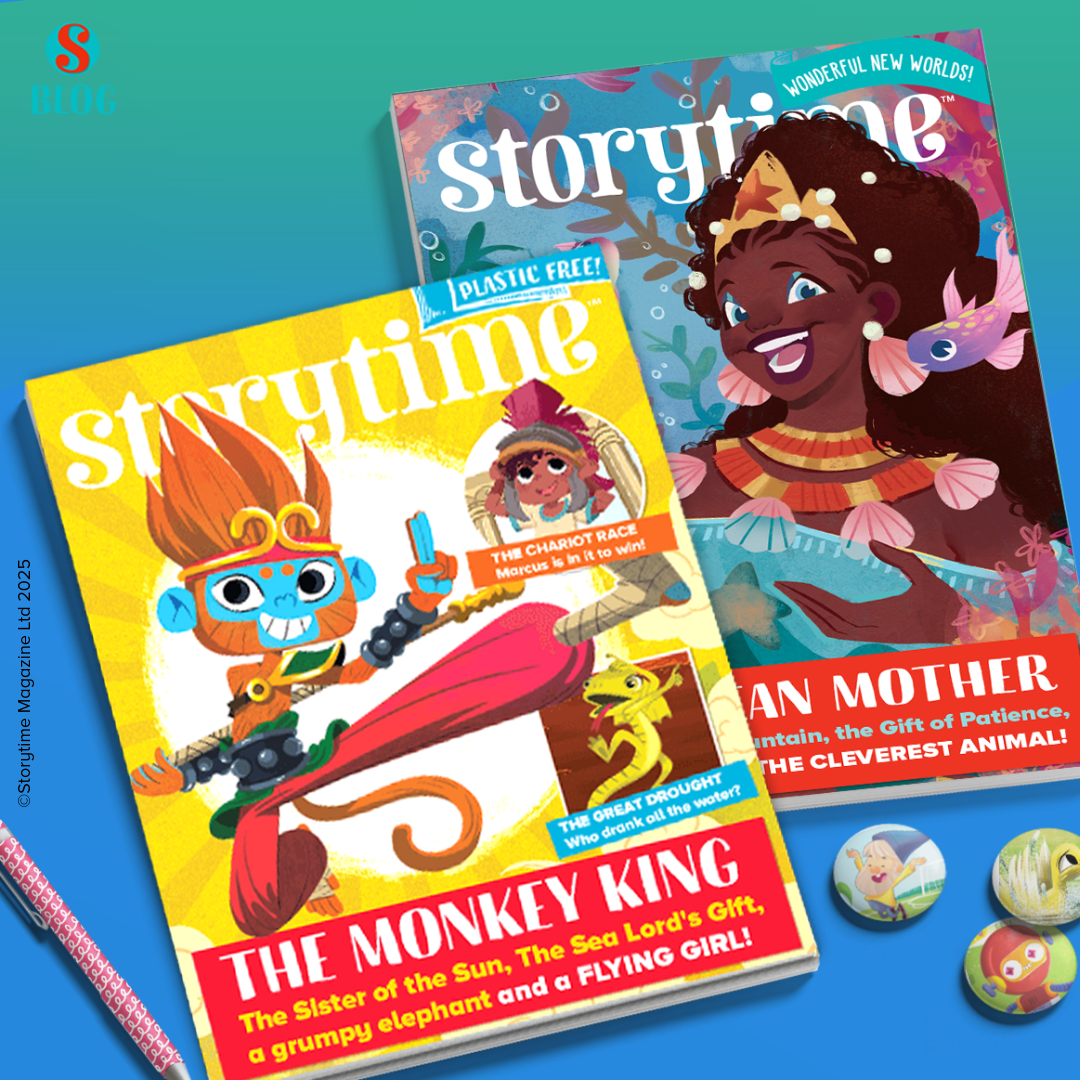
Story: ‘The Monkey King’ (Storytime 83)
Origin: Chinese

The Monkey King gets in trouble for gobbling up all the peaches in the heavenly Jade Emperor’s garden. To make up for it, he must help a monk travel all the way to India to fetch sacred scrolls.

What it teaches us about Chinese culture:
This story is based on Journey to the West, one of the most famous Chinese novels. It’s story about finding redemption by going on a quest for enlightenment reflects Buddhist beliefs.

What is universal about this story?
It’s a tale about a cheeky monkey superhero who knows kung fu, so it’s always going to be entertaining! This story has been retold many times, in TV series, in comics (the Dragon Ball manga are based on this story), video games and even a LEGO line!


Story: ‘The Golden Chain’ (Storytime 106)
Origin: Yoruba (African)

A wonderful myth about the creation of the world! A powerful spirit called Obata travels down from the clouds and creates the Earth and human beings from and endless sea.

What it teaches us about Yoruba culture:
The story is about powerful spirits called orishas, which are a key part of Yoruba belief systems. This story is about their roles in creating the world. The amazing and unique baobab tree plays an important part in this story… this massive plant is known as the ‘tree of life’ in African cultures, for it provides nutritious food, medicines and building materials and is a key part of some ecosystems!

What is universal about this story?
We all want to know about where we came from and how the world was created, and this is a truly fabulous creation myth that answers these questions in style.


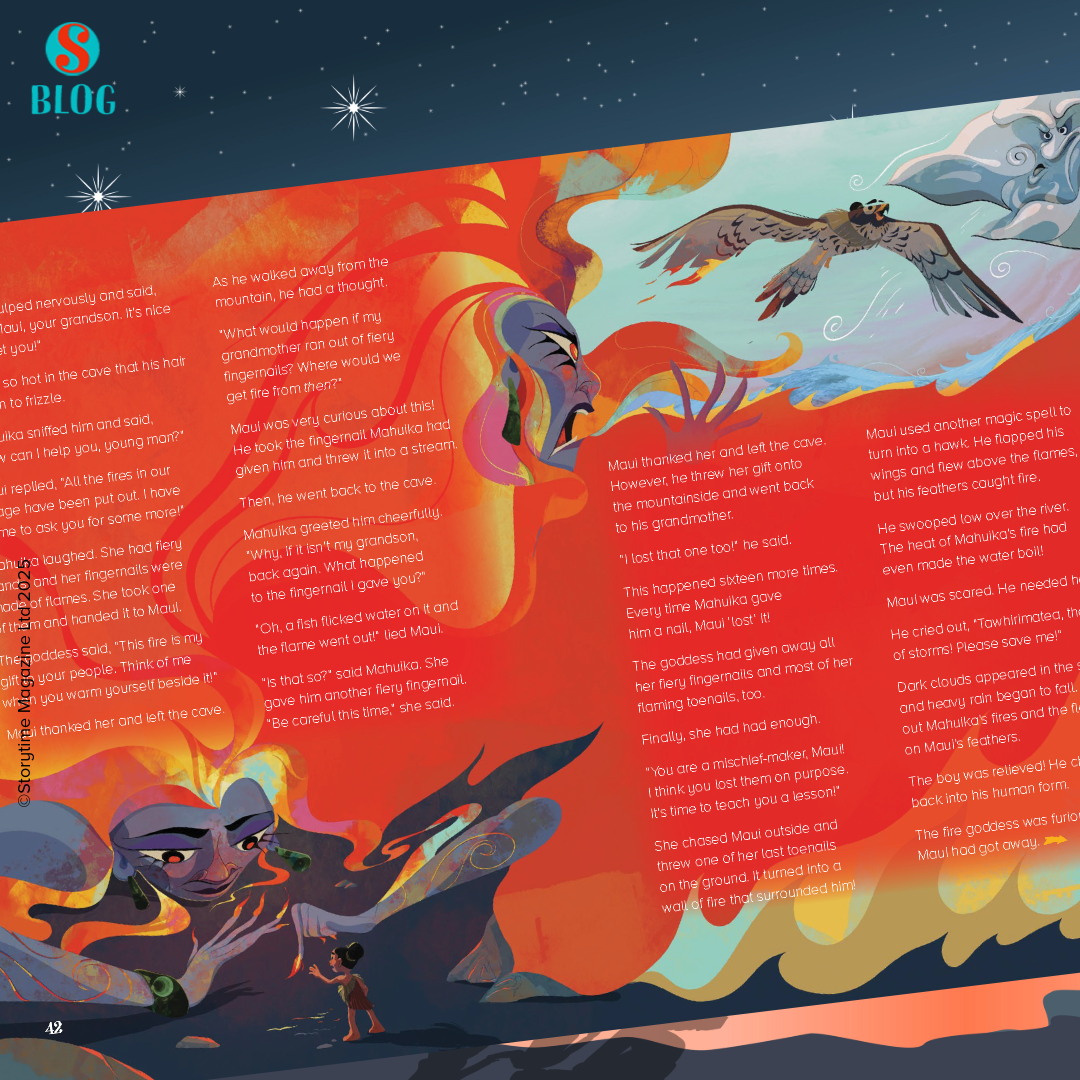
Story: ‘Maui and the Secret of Fire’ (Storytime 127)
Origin: Māori (New Zealand)

Mischievous Maui puts out all the fires in his village, so he must go on a quest to get a flame from his grandmother, a fire goddess.

What it teaches us about Māori culture:
This story shows us that the Māori traditionally lived in villages with strong family bonds. Maui the trickster is a key character in many important myths of this culture – in another tale, he even creates the islands of New Zealand. We also learn about native trees of New Zealand which can be used to start a fire!

What is universal about this story?
Maui is a classic ‘trickster’ who causes trouble and also accomplishes great deeds on behalf of his culture. Similar characters can be found in many other countries, from the Coyote of North American legends to Prometheus from Greek mythology. Tales about a fun-loving scamp who gets out of scrapes with his wits is always appealing!


Story: ‘Ali Baba and his Brother’ (Storytime 92)
Origin: Arabian

A humble woodcutter finds the enchanted hideout of a band of robbers. Unfortunately, his greedy brother tries to seal their treasure and gets in trouble!

What it teaches us about Arabian culture:
This story shows the characteristics that are valued in this culture. Hard work, honesty and cleverness are valued, while greed and selfishness are not!

What is universal about this story?
Everyone can identify with a plucky who wins against all odds. There’s also a clever heroine who outwits the robbers with ease! Plus the dazzling colours and settings of Arabian tales that bring the magic to life.


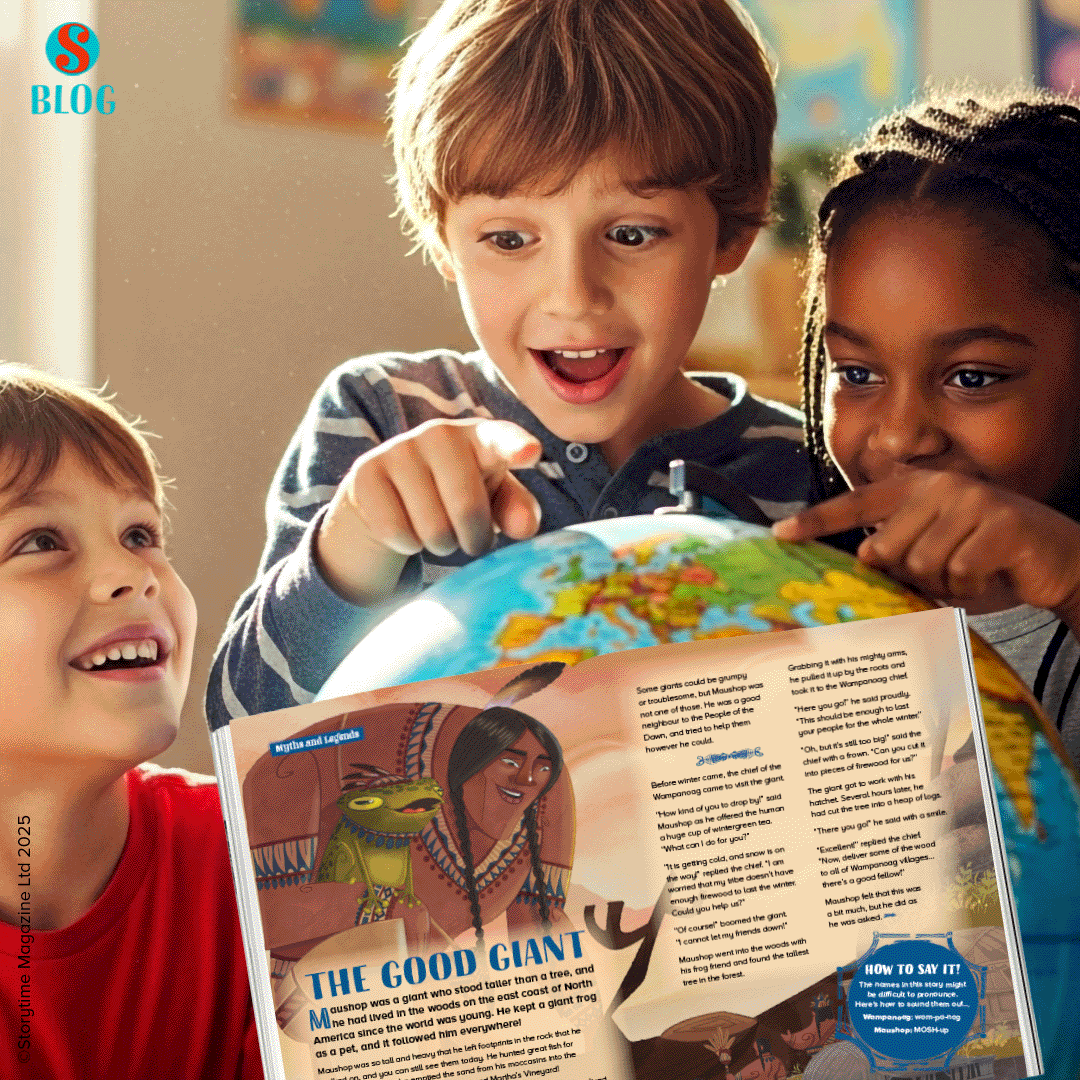
Story: ‘The Good Giant’ (Storytime 117)
Origin: Wampanoag (Native American)

Maushop is a mighty giant who uses his strength to help the Wampanoag people and shape the landscape of northeastern North America!

What it teaches us about Wampanoag culture:
Maushop lives in a wooden lodge and teaches the Wampanoag how to chop wood, fish, plant corn and grind it into flour. Through the story, this teaches us about the native Americans’ homes, foods and way of life.

What is universal about this story?
Giants are cool! It’s fun to imagine what we could do if we were the same size as Maushop. (Plus, he also has a pet frog, and pet frogs are always cool!) Maushop is a ‘culture hero’ – a mythical being who passes on skills – and such heroes appear in stories all over the world.


And the list goes one! It’s no wonder the “Around the World Tales” section is often rated as a favourite in our surveys! From cheeky monkeys to mighty giants, clever tricksters to humble heroes, these tales remind us that stories are both windows into other cultures and mirrors of our own hopes, fears and dreams. Whether it’s learning how fire was first made, imagining the creation of the world, or cheering for a hero who wins against all odds, stories connect us across time and place. After 11 years, we’re still as excited as ever to bring you stories from around the world… and the best part is, there are still so many more to tell. Here’s to many more adventures together everyone! Happy reading!

Parents Make A Difference

Parents Make A Difference!


We’ve spent the last century expanding our cities, scaling businesses, and promoting the independence of the individual. Politicians announced that there was ‘no such thing as society’, while suburban sprawl and digital nomads spread across the world.

But something else is happening across society: a quiet return to the village mindset. As the poet John Donne wrote, no man is an island and it seems as if we’re slowly remembering that.

In the business world, being part of a supportive network is often the difference between gaining momentum and burning out. There’s a reason why start-ups have transformed online community-building into a thriving industry.

And in education, we’re seeing this shift happen and it’s not a day too soon. Recent headlines in the UK have highlighted the growing power and presence of PTAs in schools. These groups have always been there, but have become critical partners in supporting schools in need of resources. They bring in much-needed funds, but they also bring in engaged, invested parents who want to make education work better.

There’s compelling data to back this up. Parentkind is a UK charity that supports parental involvement in education, and they have conducted research into how parents can help elevate their children’s’ education. John Hattie’s landmark study, ‘Visible Learning’, found that the effect of parental engagement across a student’s school career is equivalent to adding two to three years to their education.

Parentkind’s Parent Voice Report 2021 showed that 85% of parents want to play an active role in their child’s education. Where schools do make space for parent involvement, the gains are felt across the board in positive outcomes and student well-being.

A parent recently shared their experience at their local kindergarten with us. With limited funding, the parents came together to care for and maintain the school environment. They played an active role in shaping the space. Instead of letting the kindergarten close, they took action and their children thrived. They also became firm friends and felt more connected to what their kids were learning and doing. Win-win, if you ask us!

Storytime is committed to working with schools and PTAs to promote childhood literacy and a love of reading, and we’re increasingly being supported by parent communities that step forward to help fund literacy projects and bring storytelling to life. This makes a big difference, and some projects wouldn’t even happen without them.

When real communities are built around stories and a shared sense of purpose, people feel less alone, and they achieve more. They don’t need to be local, but they need a common aim. When we each give a little of ourselves to the world around us, we find that the global village is still very much alive. Perhaps we aren’t as alone as we thought!

Where could you start? There are some great inspiring advice and resources for parents at the PTA site, with checklists and useful online seminars and information on the organisation’s objectives.

(Reading) Variety is the Spice of Life

Variety is the Spice of Life – Ten Ways to Enjoy Reading!


We all have our favourite kinds of stories! Maybe you love mysteries or escaping to a world of wonder and fantasy. Tales like this can be comforting, like enjoying a warm bath or a favourite treat.

But there are so many different kinds of books and stories to enjoy, and trying something different is a brilliant way to find something new and exciting and discover the joy of reading all over again.

Here at the Storytime HQ, we believe that variety is the spice of life. That’s why we always include such a variety of tales in our magazine.

As well as fairy tales, fables and myths and legends, we have recently introduced mysteries (in Mystery Zone), real-life tales (in Awesome Adventures) and even ones inspired by science, maths and technology (STEM Time). And that’s in addition to Worlds of Wonder, where you might encounter fantasies, sci-fi or even time travel adventures and really boost your imagination!

Summer is here, and everyone should have some extra time to …read! With that in mind, we thought we would share some types of books and stories that you and your little ones might enjoy… even if you’ve never tried them before. Who knows, you might discover a new favourite genre for the new school year! Little readers, be ready. Here are some ideas:

1) Interactive Books

These are stories you can touch, lift, hear, and play with! Books with flaps, textures, sounds or secret messages pull you right into the action. Great for curious minds and busy hands!

2) Graphic Novels and Comics

Not just superheroes! Graphic novels are bursting with amazing artwork and exciting tales. Whether it’s fantasy, mystery or everyday life, they combine pictures and words in a way that’s super fun to read – perfect for visual thinkers and reluctant readers, too.

3) Gamebooks

Why just read a story when you can play it? Gamebooks are like story adventures where YOU decide what the main character does. One choice can lead to treasure… or trouble! It’s a thrilling way to practise decision-making and see how actions have consequences.

4) Puzzle Books & Escape Adventures

Do you love cracking codes, finding clues and solving mysteries? These books turn reading into a mission! Whether it’s escaping a haunted house or solving a spy mystery, every page challenges your brain – and keeps you hooked to the end. (Our Mystery Zone tale last issue was a little introduction for our readers to try!)

5) Narrative Non-Fiction

These are real stories – but told like your favourite adventure book! Whether it’s the life of a famous explorer, an amazing animal rescue, or a world-changing invention, they prove that true stories can be just as gripping as fiction.

6) Hybrid Books

Part diary, part doodle, part comic, part chapter book – hybrid books mix it all together! They’re fun, fast reads that feel like flipping through someone’s secret notebook. (And they might inspire you to start one of your own!) There are many popular books out there in this genre, so check them out: e.g. Diary of the Wimpy Kid.

7) Rhyming Tales & Poetry

Rhyme, rhythm, and wordplay turn even short stories into music for your ears! These books are brilliant for reading aloud, and they make language fun to play with. Some poems are silly, some are thoughtful – and all are packed with personality.

8) Story-based Magazines

Magazines like Storytime bring you new adventures every month – with fairy tales, comics, activities and fun facts. They’re colourful, quick to dip into, and often full of surprises. Great for growing a reading habit without the pressure of owning a long book.

9) Augmented Reality & App-Connected Books

The future of reading is here! Some books now come alive with animations, sounds or games when you scan them with a phone or tablet. It’s a magical blend of reading and tech that adds a whole new layer to the story.

10) Audio Books

They are a favourite at bedtime, when everyone is ready to nod off but fancies a calming tale! Reading and listening are complementary skills – and it’s perfectly fine to discover tales you love through listening. We always say that the more ways you enjoy stories, the better reader you will become… so read along or just listen to tales. Just make sure to choose stories that give your sweet dreams!

So what new reading experience are you going to try next?

Teaching STEM with the Power of Stories

STEM Time – Teaching Science, Technology, Engineering and Maths with the Power of Stories

We really believe in the power of learning through stories. They’re one of the most incredible ways to explore new ideas – fun, engaging, and full of perspective. And the best part? Research shows that when you learn something through a story, you’re much more likely to remember it.

Stories have long been used to teach all kinds of subjects – from Geography to History – and not just in schools. There’s nothing like a thrilling tale to help kids build their vocabulary, develop an understanding of grammar, and discover distant times and places. It just makes everything more fun.

But did you know that stories can also help us learn STEM – that’s Science, Technology, Engineering and Maths?

How can we introduce big STEM ideas to young readers and open their minds to the endless possibilities in these fields?

Well, scientists have found that humans naturally understand the world through stories! Long before classrooms and textbooks, knowledge was passed down in exciting tales told around the campfire.

With that in mind, we created our brand-new STEM Time section. It’s packed with stories inspired by real science, technology, engineering and maths.

Because STEM isn’t just about numbers, wires, or formulas – it’s about stories too.

Our team has spent quite some time collecting incredible tales from science, history, and technology – surprising, funny, and slightly bonkers narratives that reveal the human side of discovery. These stories aim to share new ideas, start conversations in the classroom, and bring fresh excitement to learning just about everything.

From what makes a robot to what happens to food in space, or even how to measure the volume of an elephant, STEM Time dives into fascinating questions with the help of powerful storytelling.

Some of the stories you’ll find read soon in Storytime:

  • The International Space Station’s unexpected pizza delivery
  • The supercomputer that learned how to use bad language
  • The surprising origins of Super Glue
  • The scientists who rebooted the Voyager-1 probe – from 24 billion kilometres away

These are more than facts – they’re cool, unexpected stories that will hook young readers rand make learning fun. They’ll hopefully engage curious minds across the curriculum or just about the world around them… because we learn way more while we are having a good time!

Even better, we’ve added extra pages packed with fun STEM facts – all presented in a colourful, accessible way. Who knows? They might just spark a lifelong love of scientific discovery.

A little plot twist though… don’t forget that all stories are STEM stories in one way or another!

After all, STEM also involves problem-solving, creativity, collaboration and critical thinking, and these things can be found in any story. So, the next time you read Storytime with a little one, why not ask them questions that will help them think about them like a scientist, engineer or mathematician.

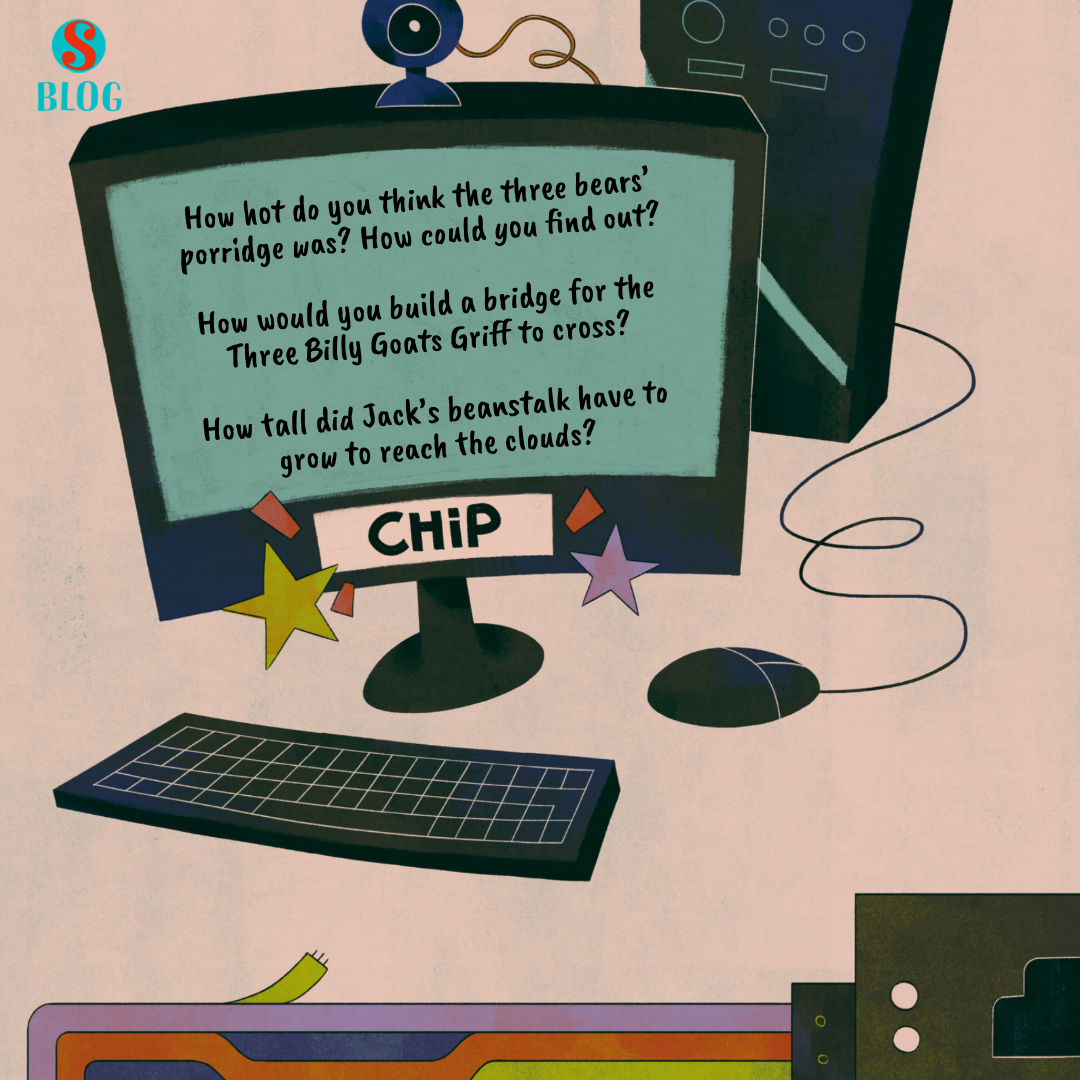
How hot do you think the three bears’ porridge was? How could you find out? 

How would you build a bridge for the Three Billy Goats Griff to cross?

How tall did Jack’s beanstalk have to grow to reach the clouds?

Coming up with curious questions and working out the answers adds a whole new layer to the storytelling experience.

Because when stories spark wonder, and wonder leads to questions, we’re already halfway to science. Welcome to STEM Time! We hope stories and science will grow side by side.

Guest Interview – Selina Brown

Guest Interview: Author Selina_Brown

This week, we’re lucky enough to have an interview with the amazing Selina Brown. She is the author of a wonderful new children’s book called My Rice is Best, as well as Nena: the Green Juice. However, writing inspiring tales for children is only one of her achievements!

Hello Selina, and thank you so much for this interview!


Q: Here at Storytime, we believe that reading and stories can enrich young minds in many ways. Can you tell us about how you started on your reading journey and where it led you?

Absolutely – stories were everywhere in my childhood. I grew up in a joyful, culture-rich home with my Jamaican grandmother and British mother, both of whom filled my world with books, oral storytelling, and imagination.

My nan had this incredible way of telling stories that made everything feel larger than life. I was reading everything I could get my hands on from a young age – not just for fun, but to explore, dream, and connect with other worlds.

That early love for reading stayed with me and eventually led me to work in media, become an author, and found the Black British Book Festival – all to keep the power of storytelling alive and accessible.


Q: We’d like to ask about your new book: My Rice is Best! What inspired you to write it?

I wanted to write something that felt like a celebration – of family, food, and culture.

My Rice is Best! was inspired by the age-old debate between Caribbeans and Africans about who makes the best rice. It’s playful but full of pride – because in every family, there’s a dish that means something special.

I wanted to explore how rice shows up in so many homes around the world in unique, delicious ways. It’s a story about children championing their heritage and learning about others through food – and it’s full of warmth, flavour, and love.


Q: My Rice is Best! is about food and how different dishes are part of our family history and culture. What are your thoughts about how our favourite foods form part of our identity and how sharing meals can bring different people together?

Food is powerful – it holds our stories, our traditions, and our connections. Our favourite meals are often tied to moments: birthdays, Sunday dinners, family celebrations. When we share a dish, we’re inviting someone into our world.

For children, it can be a really empowering way to express pride in their culture, and also a fun way to learn about others. Whether it’s rice and peas, jollof, risotto or biryani – these dishes tell a story. And when we share them, we build bridges and celebrate differences in the most delicious way possible!


Q: My Rice is Best! is not your first book. Nena: the Green Juice also has a food theme! Can you tell us about it and its message?

Yes! Nena: the Green Juice is about a little girl who decides to make green juice all by herself for the very first time. It’s a playful, energetic story that takes young readers on a fun kitchen adventure as Nena chops, blends, and experiments with different fruits and vegetables. She’s determined to create something healthy and delicious – even if things get a little messy along the way!

At its heart, the book is about confidence, independence, and trying new things. It encourages children to explore healthy eating in a joyful and relatable way. I wanted to show how food and wellness can be fun and empowering – not something adults just hand to kids, but something they can get involved in too.


Q: How important do you think it is for kids to see themselves and their culture represented in stories? That is certainly one thing that we are trying to do in Storytime magazine, but what can be done to encourage more representation?

Representation is vital. When children see themselves in books, they feel validated – like their world, their family, their voice matters. It builds confidence, identity, and creativity. But it’s also important for every child to experience diverse stories – that’s how we raise inclusive, empathetic people.

We need to keep championing diverse authors, pushing for authentic stories, and making sure all children can access books that reflect the full spectrum of experiences.


Q: We have to mention the Black British Book Festival, which you founded. What motivated you to start it, and how has it grown and evolved since then?

The Black British Book Festival came from a desire to celebrate – loudly and proudly – the amazing talent in our community. I was seeing so many brilliant Black authors and creatives being overlooked or boxed in. I wanted to create a space where they could shine on their own terms.

Since launching in 2021, the festival has grown into a national movement, touring cities across the UK and welcoming thousands of people. It’s become a platform for joy, discovery, and connection – and we’re just getting started. Seeing children walk into a space where Black literature is celebrated front and centre? That’s the real magic.


Q: We also love the Croydon Black Book Community Library space! Are there plans to open more of them around the country?

Our space in Croydon has been so special. It’s more than a library – it’s a place where children can walk in and instantly see themselves in the pages of a book. The response has been incredible, and yes – we’re exploring ways to open more across the UK.

The goal is to build a network of joyful, culturally-rich community libraries where Black stories are celebrated and accessible to all. We want every child, no matter where they live, to have that same experience of seeing their world reflected in books.


Q: Finally! You are also a mentor for Writers on the Rise. What advice would you give to aspiring writers?

Write boldly. Don’t shrink your voice or try to fit into a box – tell the story only you can tell. The industry is changing, and there’s room for fresh, original voices – especially ones that haven’t been heard enough.

Read widely, protect your creativity, and find a community that uplifts you. And most importantly, keep going. Every great writer was once an unpublished writer who just didn’t give up. Your words matter – the world is waiting for them.

Get Creative With Rhymes

Get Creative With Rhymes


Get Creative With RhymesThe new issue of Storytime features our latest competition! The Story Rhyme! contest opened on August 2nd, and it challenges kids to write cool poems about their favourite place in the world. It was inspired by a wonderful story, ‘The Stolen Treasure’ by Ellie Williams, a fun tale about a seasick pirate who finds a wonderful new home.


We believe that writing poetry is a great way for children to express themselves creatively and discover the joy of playing with language.


We’d love it if your little ones entered the contest, and this blog gives tips on how to help and encourage them in their poetic endeavours!


The first step is to download our special Story Rhyme! Competition pack. It introduces kids to different poem types and poetic techniques and includes many different puzzles and games to get them inspired to write works of their own.


Creating poems can be playful and fun, and it’s an excellent way to let children’s’ mind run free!


If they send their creation in to us by 30th November 2023, they could win prizes: the winning poet will get their masterpiece printed in Storytime, a printed certificate, a cool book bundle, and a Storytime Hub subscription for the whole school for a year!


Here are some ideas to help get your kids’ creative juices flowing!

  • Get a notebook! Encourage them to jot down cool words, images, rhymes and phrases that come to mind. Then, when they sit down to create their poem, they will have material for inspiration!


  • Poets read poems! Other poets can be a brilliant source of ideas! Help your little ones to find poems online or in the library. They can also ask people they know to recommend their favourite poems. Inspiration can be found in unusual places – for example, the Poems on the Underground programme puts interesting pieces of writing in carriages on the London tube network!


  • Write regularly! Ask them to write a short verse or just note down a cool image or phrase once a day. Make writing a habit, but keep it light and fun… poetry doesn’t have to feel like homework!


  • Go with the flow! Kid should feel free to experiment and try out new ideas when writing poems, even if they don’t quite work out!


  • Try something new! If your little poets aren’t feeling inspired, get them to write a new type of poem. The Story Rhyme! Competition pack has a list of them! They could a go at a haiku, go crazy with a nonsense poem, or carve out a concrete poem in the shape of its subject!


  • Have fun with poetic techniques! The Story Rhyme! Competition pack also includes information on different poetic tricks they can use. You’ll be surprised by the cool rhymes, similes, metaphors and alliterations your kids can create!


  • Look at life in a poetic way! Ask them to describe interesting things you see in poetic terms. Things like, ‘That storm cloud hangs like a heavy hammer over the neighbourhood’ or ‘the bus crawled up the road like a ladybug down a flower stem…’ Thinking like a poet can make their life brighter and more interesting!


We are already so inspired just thinking of all the places we will visit through the amazing poems coming our way! Where will your children’s poems take us? We look forward to reading all their wonderful entries for our contest – get scribbling, you all, poets of tomorrow!


Download your our special Story Rhyme! Competition pack here.

We are excited about receiving your entry!  The closing date is 30th November 2023. Enter today to win some fabulous prizes!

The Science of Stories


What is the best thing about making Storytime? It is definitely sharing our favourite tales with our wonderful readers. (That’s you!)


We humans have been telling stories for many thousands of years – our ancestors were almost certainly doing this before the dawn of civilization. You might even call humans ‘the storytelling species’!


We love stories. You do too, we suspect! But have you thought about why stories are so engaging?


Scientists have been researching how our brains engage with stories and have made some fascinating discoveries! If you needed more reasons to read more stories, then these facts below might convince you for once and all that stories are the BEST way to teach and learn, having fun along the way.


1. Our brains are stimulated by stories!

Researchers can scan the brains of test subjects to see which parts activate when doing different activities. When people were given lists of facts, two parts of the brain lit up: the language processing and language comprehension centres.


But what happens when they read a story instead? Five sections of the brain lit up: the language processing and language comprehension centres, the motor cortex (the part of the brain that plans for and executes movement), the amygdala (which deals with emotions) and the visual cortex (which processes visual information).


This is because when we read a story we feel physically engaged with it (think of when you felt tense when reading a scary tale, for example), we also empathise with the characters and experience their emotions at second hand, and finally we can visualise the scenes and characters described in it.


This helps to explain why we find stories so engrossing – reading them stimulates large parts of our wonderful brains!


2. These experiences help us learn!

Because so many parts of our brains are activated when reading stories, we absorb and retain information from them more effectively than when we learn in other ways. But how much more effectively?


Twice as well? Ten times as well?


Research indicates that we actually retain information from stories up to twenty-two times better, compared to a basic listing of facts. When we read stories, our brains soak up information and make connections without even realising it and therefore it’s more likely they will stay with us for longer.


The Awesome Adventures tales in Storytime were created with this principle in mind. Rather than presenting dry facts about famous people, we chose to share cool stories from their lives that will hopefully captivate readers and connect them with the characters. It’s no coincidence that it is a very popular section where you can learn while having fun.


3. We develop relationships with characters and that makes us happier!

Have you ever felt a close bond with characters in a really involving story? Believe it or not, there is a scientific reason for that! When we read a story, our brain can release a chemical called oxytocin. This is a bonding hormone that causes us to care about the people in our lives.


Oxytocin can be responsible for making people feel as if they relate to fictional characters. When this happens, we feel more invested in stories and internalise what it is trying to communicate with us. The feel-good factor of stories is no coincidence, it also helps us to feel like we belong.


4. Stories are powerful because they combine entertainment and education

Reading stories is a fantastic form of entertainment, engaging many parts of our brains and connecting with our emotions. But this also makes them powerful tools for learning – when we are emotionally connected with what we are reading, we absorb information more effectively.


Think back to our ancient ancestors, trading tales around the campfire. They told stories to entertain and bond with other members of their group, but also to pass along knowledge and wisdom in a highly effective way. Through history there are many examples where stories were used to protect us from danger, to guide us through challenging times.


Stories unite us all, and that is the ultimate power. But having science to show us how much power makes us more determined than ever to keep sharing stories far and wide.


Here at Storytime, we like to think that we are continuing a tradition and also bringing it to new audiences. Stories provide entertainment, escapism and education… all at the same time. And the learnings we share through them won’t ever be forgotten.

Imagine That! The Power of Fantasy in Stories

The power of fantasy in stories


Fairy tales, fantasy epics and science fiction stories (like ‘The Racer from Outer Space’, from this month’s issue of Storytime!) and have been popular with readers of all ages for a very long time! However, whilst some people might see this kind of story as being ‘mere’ escapism that doesn’t teach us much… we believe they play an important role in making young readers fall in love with stories! Our Worlds of Wonder strand often features adventures in imaginary worlds, with fantastical characters. They have been very popular for many years so here is why!

We would like to share seven reasons why fantastic literature should be on everyone’s reading list!


The power of fantasy in stories

1. They ARE escapist… and that’s a good thing!

One of the appealing things about fantasy and sci-fi is that they do allow us to escape the mundane world for a time. We all need to relax now and then, especially in stressful times, and reading a tale about an epic quest in an imaginative world might be a healthier option than playing a game on a tablet or watching TV!


2. They stimulate the imagination!

Reading any book requires us to use our imaginations to visualise characters and settings, but tales of the fantastic take this to the next level. We can all imagine a letterbox or a car relatively easily, but conjuring up a picture of an alien or a princess who transforms into a swan is a rewarding imaginative challenge!


3. They increase mental flexibility!

Fantasy and sci-fi tales take place in worlds that differ from our own and work by different rules. Perhaps magic works, for example, or spacecraft can move faster than light. JRR Tolkien, author of ‘The Lord of the Rings’, called fictional realms with their own consistent laws ‘secondary worlds’. Part of the fun of reading a fantasy novel is exploring a secondary world and discovering its secrets and rules. Engaging with a world that runs by a different logic to our own encourages us to think in new ways and come up with new approaches to problems!


4. They build new vocabulary!

The best way to build vocabulary is to read books that contain lots of new words! You can work out what they mean from context or keep a dictionary handy and look them up… Tales of the fantastic are often filled with new and interesting terms to discover. Need proof? Talk to a fantasy fan, and they are sure to know lots of cool terms for magical items or bits of medieval armour. Sci-fi afficionados, on the other hand, can tell you about high-tech concepts or facts about science and space.


5. They encourage us to think beyond the literal!

Science fiction and fantasy may be about different worlds, but the best ones also have profound things to say about the world we live in. They just use fantasy metaphors to communicate them to us! This means that fantasy can be more challenging than stories set in the ‘real’ world because readers must work out the messages that authors are trying to get across.


6. They deal with big themes!

Continuing from the last point, many fantasy and science fiction novels have profound and complex themes – they certainly aren’t ‘just’ escapism! A story that involves contact with aliens (like this month’s Storytime cover story!) makes us think about what it means to be humans and how we communicate with those that are different from us. Fantasy stories often ponder heavy themes such as the nature of good and evil and what we would sacrifice to protect the things we love. However, because these ideas are introduced in a fictional context and in fictional worlds, they can be more approachable to younger readers.


7. They open our minds to infinite possibilities!

As humans, we can imagine how things could be different, and then work towards making what we imagine a reality. Stories of the fantastic introduce us to mind-bending ideas and encourage us to think in new and innovative ways. It’s no mistake that many of the most successful entrepreneurs, innovators and creatives of modern times were enthusiastic sci-fi fans or fantasy gamers in their teens, as engaging with the fantastic encourages creativity. Many say that a love of fantasy and sci-fi might just have been their superpower. So encourage your kids to read fantastic stories… who knows where it might take them!


There should be no boundaries for which worlds you would like to visit while reading stories! We encourage you to go far and beyond, wherever your imagination takes you! And there are many places yet to be visited, so we hope to write about them all… and we truly hope you will join us!

Grandparents The Real Superheroes


We humans are pretty amazing creatures, and there are many things about us that might be considered ‘superpowers’. Think about our wonderful creative brains, our ability to communicate complex ideas to each other, or even our amazing thumbs, which allow us to pick up and use objects with ease.


But anthropologists (scientists who study human societies) think that there might be another super-secret that helped us to become so successful as a species: grandparents!


‘Grandparents can be pretty cool,’ you might say, ‘and they might be great at telling jokes or fixing things or baking a Victoria sponge. But how are they super?’


Well, research seems to show that in hunter-gatherer societies grandparents helped raise children, gathered food using their knowledge, and passed on the many things they had learned in their long lives to the little ones.


I bet you’re wondering, “What does this have to do with stories?’ Well, we’ll tell you: grandparents often passed on their wisdom for stories! Storytelling by grandparents is the most wonderful human tradition and it goes back to before the beginnings of history.


But in many Western societies nowadays, we focus so much on the immediate ‘nuclear family’ (parents and their kids) that we don’t spend as much time with the extended family (cousins, aunts, uncles and grandparents). But how nice it would be to encourage grandparents and grandkids to spend more time with each other? It could enrich both their lives immensely, and what better way to do that than by sharing tales?


When children are able spend quality time with the superheroes in their lives, Nanna and Grandad, we would like to encourage them to read together! Storytime has a variety of themes and stories to please everyone and help to build a bridge between both worlds: children can share their Worlds of Wonder and grandparents can share famous folk tales from Storyteller’s Corner with mastery! They can also share their favourite stories from when they were children or talk about things they have experienced in their lives!


Here are several benefits that sharing stories can have in the family:

  • Grandparents and grandchildren having the chance to spend more quality time together. The bond they will create through stories will stay with them forever.
  • Grandparents will get to pass on the things they have learned and share the family’s history. This can help the kids feel ‘grounded’ and strengthen their identity and sense of belonging.
  • Senior citizens often feel isolated in modern times, and this is a great way to counteract that! Reading time could become special for everyone involved and something they both look forward to. It can be something they also look forward too, where they feel connected and part of their family lives.
  • It also gives a helping hand to busy parents, and they too will enjoy knowing their kids are having such a lovely time with the extended family!
  • It is a very important part of forming a healthy habit of reading. By creating a routine of sharing stories, your child will always look forward to it. A lifelong love of reading is a gift, and it’s one they will never forget!


Kids learn best from the important people around them. Storytime was created with a mission in mind – to create stories families and friends would read, love and share. To encourage everyone to spend more time reading with kids, we have created a special READ TOGETHER pack.


It is full of tips and activities that will make shared reading more fun for grandparents, parents, carers, uncles, aunts and even older siblings! It can be downloaded for free here and make sure to share it with someone you care about!


It takes a village to raise a child and we truly believe reading together is an essential part of raising healthy and happy children! Can you think of a favourite story that your grandparents shared with you? Next time you meet the real superheroes in your life, don’t forget to thank them for all the wonderful stories they share!