Archive for the ‘Inside Stories’ Category

Little Heroes for Little Readers

kids magazine subscriptions, tom thumb resource pack, teaching resource, storytiime magazine, subscriptions for kids, little heroes for little readersTom Thumb is our teeny-tiny cover star for Storytime Issue 35 and we have a fantastic Tom Thumb Resource Pack to give away too. Get it below!

kids magazine subscriptions, storytime magazine, tom thumb resource pack, little heroes for little readers, fairytales

Thumbelina in Storytime Issue 17, illustrated by Line Paquet.

Alongside Thumbelina by Hans Christian Andersen (see Storytime Issue 17), Tom Thumb is probably one of the world’s best known diminutive fictional heroes. Or, at least, different versions of Tom Thumb are well known, because this plucky little character exists in cultures all over the world. He has been around for over 400 years.

In Japan, there’s Issun-Boshi, the Inch-High Samurai. In France, there’s Hop o’ my Thumb, who beats an ogre. The Brothers Grimm in Germany wrote about Thumbling. Meanwhile, in Eastern Europe, there’s the Hazelnut Child, who wins a diamond from an African king. There are many more.

Tom Thumb’s character, as a subject of superstition, was first in print in 1579, but he made his fairy-tale debut in 1621. It’s likely that this was the first ever printed fairy tale in the UK. Tom stayed small but, as his popularity grew, his adventures became increasingly exciting. In time, he even became a knight in King Arthur’s court.

It’s no surprise that stories with small heroes and heroines should be so popular among children. Kids not only relate to the size of the hero or heroine, they learn valuable lessons in courage, confidence and curiosity. These types of stories say, “Just because you’re small, it doesn’t mean you can’t achieve big things.” Kids empathise with the hero’s perils and rejoice in his successes. They see life from the hero’s perspective. It’s empowering stuff for little readers – and consequently fires up their imaginations.

Small World Activities

But don’t just read Tom Thumb and Thumbelina. Extend the fun with some small world activities to help you see the world through the eyes of our little fictional heroes. Here are some ideas:


Tom Thumb Resource Pack, Storytime magazine, magazine subscriptions for kids

One of the activities in our Tom Thumb Resource Pack. Free to download!

1. Make a whole world in a shoebox (or a bigger cardboard box if you’re feeling ambitious). You could create a room or landscape from one of our stories or invent an imaginary place with whatever buildings or locations you can dream up. What do Tom or Thumbelina need? Our Tom Thumb Resource Pack features room decorations you can print out and use in your world. Download it here.

2. Play with finger puppets and pretend Tom Thumb and Thumbelina are tackling everyday challenges like climbing a flight of stairs, or trying to get a drink of water or eat an apple. How do they get around these problems? Download our printable finger puppets for Tom Thumb.

3. Get down to floor level and imagine what life is like for a miniature character. It could be Tom Thumb, Thumbelina, a mouse or an ant. What obstacles do they have to face? What are the benefits of being small? Can you write a diary – a day in the life of a miniature creature or hero?

4. Visit your local library and read other stories with tiny characters. Try The Borrowers by Mary Norton and Mrs Pepperpot by Alf Proysen. Write your own little hero story – or take Tom Thumb on another adventure!

5. Try our activities in our Tom Thumb Resource Pack. Have a go at some pint-sized poetry, rewrite the story using our Tom Thumb storyboards, play our Bigger or Smaller game, spot Tom Thumb hiding in our picture, make a story map, print out our character mask and act out the story, and do some colouring and drawing.


This week, instead of thinking big, think small. Short stories, small worlds, tiny heroes and little readers!


Let us know if you get up to any of the activities listed here on Twitter, Facebook or Instagram. If you enjoy our Tom Thumb Resource Pack, download more from our Schools website. Plus, if you’re a teacher, we send out additional packs every month to our school subscribers. Contact us to make sure you get yours.


Have teeny, tiny fun!


Why Cumulative Stories Are Cool!

storytime magazine, kids magazine subscriptions, old woman and her pig, cumulative stories, chain tales, best bedtime stories, best magazines for kidsOnce upon a time, there was company called Luma and they wanted to publish a wonderful story magazine for children, so they went to the bank and asked for some money, but the bank said, “No. We can’t help you until you’ve found a big magazine distribution company to work with.” So they went to the big magazine distribution company and told them they could only get money from the bank with their help, but the big magazine distribution company said, “No. We can’t help you until you’ve found a good printer.” So they went to a good printer and told them they could only find a big magazine distribution company to work with and get money from the bank with their help, and the printer said…

You get the idea. In this week’s blog, we’re talking about cumulative stories – also known as chain tales. These fun folk tales and rhymes form an important part of the story cannon, and they exist in every culture around the world.

In our latest issue, Storytime 35, we’ve got a classic cumulative story you might remember from your own childhood: The Old Woman and her Pig (with fantastic illustrations by Cristina Yepez). There are variants of this folk tale all over Europe and, though it’s a story you hear less often today, it still goes down brilliantly with kids. Why is that?

Repetition, Humour and Brilliant Endings

At the risk of repeating ourselves, we think it’s down to that magic story ingredient: repetition. Stories with repetition allow children to appreciate the rhythm of a text and anticipate what’s coming next, which makes them feel smart. Even better, it allows them to participate in a meaningful way. But there are more reasons why repetition is important in children’s stories and you can read them here.

Another winning feature of cumulative stories is the humour. As the story gets longer and more convoluted, the list of characters involved usually becomes wackier; and the actions that unfold more surreal. You feel like you’re being led along a safe path of repetition until, suddenly – as in The Old Woman and her Pig – she’s having a chat with a pond or persuading a rope to return to its owner.

But probably the best thing of all about cumulative stories is the ending, when the repetition reaches its climax, followed by a swift and satisfying conclusion. The grand finale is always full of rhythm and great fun to read aloud, but do remember to take a deep breath before you get stuck in! Cumulative stories have their own unique reading style and, if you can relax and get into it, reading them can be an enjoyable experience, which truly engages your child.

So if you loved The Old Woman and her Pig and want to try some more cumulative stories, here are a few gems we recommend:

6 More Cumulative Stories for Children


kids magazine subscriptions, magazines for kids, storytime, storytime magazine, old lady who swallowed a fly, cumulative stories, rhymes for kids

There Was an Old Lady… a cumulative rhyme from Storytime Issue 5, illustrated by Irene Dickson.

1. The Gingerbread Man – This classic fairytale is so popular with toddlers, and it has many international variants. You’ll find it in Storytime Issue 2.

2. The House that Jack Built – Cumulative rhymes have a long history too and are still much loved by children. Don’t miss our version in Storytime Issue 16.

3. Henny Penny – Sometimes known as Chicken Little or Chicken Licken, a hen convinces a series of friends that the sky is falling in. Read it in Storytime Issue 19.

4. There Was an Old Lady Who Swallowed a Fly – Another enduringly popular cumulative rhyme, with really fun illustrations in Storytime Issue 5.

5. The Red Mitten – A lovely winter’s tale with adorable animals, which featured in our cosy Christmas Storytime Issue 27.

6. The Enormous Turnip – A much-loved fairy tale from Russia, which featured in Storytime Issue 29.


In future, we’d also love to feature Tikki Tikki Tembo – a cumulative story from China about the challenges of giving your child an exceedingly long and ridiculous name. And if you’re looking for a cumulative story in book form, you can do no better than the brilliant Green Eggs and Ham by Dr Seuss.

How do you feel about cumulative stories – do you love or hate reading them? Any top story-reading tips to share with other parents or teachers? Let us know on Twitter or Facebook! Let’s spread the reading knowledge and love.


By the way, we should say that our own cumulative story had a happy ending!


The Wonderful World of Myths

kids magazine subscriptions, magazine subscriptions for kids, best stories for kids, greek myths, world myths, myths for kids, mythology for kids, storytime magazineWe’re three years into making Storytime now and we’ve gathered an abundance of stories of all kinds – our very own library of wonders. In doing so, we’ve realised that it’s not just fairy tales that suffer from “safe bet syndrome”*, it’s myths and legends too.

In the UK’s book publishing industry and education world, most of the emphasis is on learning about or reading Greek myths. Many of them make great stories, and they tie in with curriculum studies of Ancient Greece. We get it.

Norse myths probably come second in exposure, perhaps with thanks to Marvel’s Thor (which we’ve written about here), but public awareness of myths and legends of other great civilisations is horribly lagging behind.

magazine subscriptions for kids, gifts for kids, stories for kids, myths for kids, greek myths, storytime magazine

Is Perseus and Medusa the Jack and the Beanstalk of the myth world? (Art by Phill Hosking)

At school, there may be exposure to the odd Rama and Sita or Egyptian underworld myth, but in the wider world, Theseus and the Minotaur (or Perseus and Medusa) have become the Jack and the Beanstalk of myths, while Pandora is our Cinderella. In short, we keep telling the same stories from just one location over and over again. It’s a huge pity when you think about it.

Stuck in a rut with Greek myths?

I think, just like the world of fairy tales, we’ve got stuck in a rut, exploring, revamping and publishing the same old Greek myths. Do this often enough  and they become the myths that readers know and love best. The myths that readers expect – and keep asking for.

It’s for that reason we’ve featured many of Greek mythology’s greatest hits in Storytime. However, we’ve also been sneaking in some lesser known myths and legends too. Our reason for this is that we don’t want you to miss out on truly great stories. Would you really want the same slice of chocolate cake for dessert every day if you could also try chocolate cake supreme?

Perhaps the other reason is because we can (see here). Also because, if we don’t, we worry that this “safe bet” approach will run for decades to come. Readers will completely lose interest in myths and legends that aren’t Greek or Norse. We risk raising generations of kids who’ve never heard of great fictional heroes and heroines from other world myths. If we keep doing this, we unwittingly place barriers between ourselves and other cultures. We don’t want to contributing to the end of global thinking.

kids magazine subscriptions, magazine subscriptions for kids, storytime magazine, best bedtime stories, native american folktales

White Buffalo Calf Woman, a Sioux story illustrated by Georgia Broseghini.

A world of myths in your hand

In our latest issue, Storytime 34, we feature a wonderful Sioux legend – White Buffalo Calf Woman. When her people are on the brink of starvation, she brings forth the peace pipe and shows them how to use it in rituals and celebrations to save themselves. This story resonates so strongly in Sioux culture that, even today, white buffaloes are considered sacred. White Buffalo Calf Woman isn’t just a saviour, she’s powerful, terrifying, benevolent and knowledgeable – like the best Greek gods. In fact, she’s probably better than most Greek goddesses, who often end up subjugating themselves or living in sufferance. The stunning illustrations for this legend are by Giorgia Broseghini.

White Buffalo Calf Woman is our kind of legend. For other lesser known myths and legends in Storytime, check out these stories, all available from our Back Issue Shop:

  • The Hero Twins – a Mayan underworld myth in Storytime Issue 4, featuring football and the origin of the sun and the moon.
  • Finn MacCool – an Irish legend in Storytime Issue 7 with giants, humour and the origin of the Giant’s Causeway.
  •  The Great Gilgamesh – Storytime Issue 11′s Mesopotamian myth about a deadly beast and the two heroic friends who take it down.
    •  The Queen of Winter – a Scottish legend in Storytime Issue 15 about the origins of spring and how the rule of a cold-hearted queen is put to an end.
    •  The Golden Staff – a dramatic South American myth from Storytime Issue 20 about the founding of the Incan civilisation.
kids magazine subscriptions, storytime magazine, finn maccool, irish myths, myths for kids

Finn MacCool fights the good fight in Storytime Issue 7. Art by Tim Paul.

  • Ra’s Secret Name – an Egyptian myth about how the goddess Isis tricked Ra into handing over his powers. Featured in Storytime Issue 22.
  •  Ganesha and the Golden Mango – a funny and clever Indian myth in Storytime Issue 25. It reveals how elephant-headed god Ganesha became so prominent.
  •  Momotaro the Peach Boy – a Japanese myth in Storytime Issue 26 about a young boy, born from a peach, who slays an island of ogres.
  • Also, in Storytime Issue 36, we have the story of the goddess Pele, and how she came to rule over the volcanoes of Hawaii.

Travel through time with us

In combination with our Around the World Tales, which feature a story from a different culture every month, we want to expand our young readers’ minds. We’d like to taking them on amazing adventures through time and around the globe. But, above all, we hope to give them a taste for more than just Greek myths. There’s a wonderful world of myths and legends out there.

Don’t get us wrong, we’ll always have a place for Greek myths in Storytime. However, it’s time to make room for myths and legends from other cultures too.

What are your favourite myths and legends? Any we should be featuring? Let me know via Twitter, Facebook, Instagram or Pinterest. You can even drop us a line via Youtube! (Something Neil Gaiman’s Media might appreciate.)


Do us a favour, choose a different myth this week,

*Read our thoughts on fairy tales in publishing here, and get recommendations for fun fairy tales you never knew.

5 Grimm Fairy Tales To Read Today

storytime magazine, brothers grimm, fairy tales, kids magazine subscriptions, bedtime stories, kids magazinesIn Storytime Issue 34, we feature a Brothers Grimm fairy tale, which, at least in the UK, is one of their lesser-known stories. It was originally called Jorinde and Joringel, but we’ve called it The Magic Flower.

kids magazine subscriptions, brothers Grimm, grimm fairy tales, magazine subscriptions for kids, fairy tales, storytime magazine

In The Magic Flower, the wicked sorceress turns Jorinde into a bird. Art here and top by Erika Meza.

It has all the elements you’d expect from a classic Grimm fairy tale:

  • An enchanted castle in the woods
  • A wicked sorceress with a penchant for turning young women into caged birds
  • A young couple in love
  • Their love put in jeopardy
  • A hero’s quest
  • A flower that breaks any dark spell

My favourite character in this Grimm fairy tale is a little old lady with a twinkle in her eye. She gives the hero a bedtime drink, which enables him to dream the location of the magic flower. Is she the real hero of the story? Who is she? I like to think she’s the sorceress’s good-hearted twin sister.

Of course, everybody has heard of Hansel and Gretel, Princess and the Frog, Rapunzel, Cinderella, Rumpelstiltskin and Snow White, and we’ve featured them all in past Storytime issues. You can pick them up from our Back Issue Shop. But there are many more Grimm fairy tales, like Jorinde and Joringel, which don’t get the same exposure as these more famous ones. Some of them are just too old-fashioned, dark or violent for young readers, but many still make fantastic reads. With that in mind, here are five of our favourite ‘unknown’ Grimm fairy tales, some of which might make it into the pages of Storytime in future.

Great Grimm Fairy Tales You’ve Never Heard Of…


1. The Three Spinners. This tale of a lazy young woman who can’t be bothered to spin, yet unintentionally ends up working as the queen’s spinner, is one of my all time faves. Three spinners with striking and unusual features come to her rescue, but only on the proviso that she treats them as her cousins. She has no qualms about pretending they’re her relatives. What I love about this tale is that cheating works in the young woman’s favour and there is no moral lesson. In fact, it all works out rather well for her. Lazy she is, and lazy she stays. It’s a tale for rebels of the idle variety.

2. Mother Holle. Better known in Germany, this tale has a classic theme: the virtuous, industrious sister versus the lazy sister. However, it has some delightful additions: a secret world at the bottom of a well, an old lady who shakes out her feather bed to create snowflakes and a smart-witted talking crow. The sisters get just what they deserve and the ending is wonderfully visual.

3. Queen Bee. A young “simpleton” brother getting the better of his two older brothers is another recurring theme in the world of fairy tales, but there’s something pleasing about the way this story unfolds and also in the simpleton brother’s respect for nature. He forms some unlikely alliances, which help him tackle a series of impossible challenges. And his two brothers get off lightly too. Another great Simpleton-done-good tale is The Poor Miller’s Apprentice and the Cat – if only for the imagery of a castle run entirely by cats and kittens.

4. Clever Gretel. While not suitable for young Storytime readers in its original form, parents might enjoy this funny story about a talented cook who, bored of waiting for her master’s guest to arrive, swigs a little too much wine and ends up eating their dinner. When the guest finally arrives, Gretel uses her considerable wits to explain the disappearance of their meal. You can’t help applauding her ingenuity.

5. Hans My Hedgehog. Though this story needs to be updated for the young and modern reader, it’s worth reading for its sheer madness and creativity. Hans is a human in the guise of a hedgehog who rears pigs, rides on the back of a rooster, and plays bagpipes. The premise is a common theme in fairy tales: “I want to have a child, even if it’s a…” And the ending is 100% fairy tale too – Hans marries the princess. Finally, the image of hedgehog Hans riding a rooster is quite irresistible.


Are you familiar with these tales already? Are there any Grimm fairy tales you love that we’ve missed out here – or ones you’d like to see in Storytime? Let us know via Twitter, Facebook or Instagram. We’d love to hear from you. And if you’re interested in lesser-known fairy tales, read our thoughts on Forgotten Fairy Tales too. We’re intent on bringing them back!


Happy reading all – have a Grimm week!


Free Printables and Story Resources

Storytime magazine, free printables, Golden Goose, teaching resources, lesson ideas, downloadsWe love publishing a children’s story magazine, but we don’t stop there. We believe that stories are powerful tools for extending learning and for inspiring play. Hence every Storytime issue comes with suggestions for activities, plus puzzles, games and free printables, comprising masks, finger puppets and colouring. With every issue of Storytime, we hope to give our readers a richer and rewarding story experience – something beyond reading.

For schools who subscribe to Storytime, we also create a story-focused teaching resource pack. These are filled with lesson ideas, ranging from literacy and maths to science and art. Each pack also comes with comprehension and writing activities to help children understand the bones of a story. Even better, it will help them become confident storytellers in their own right.

To show you how rewarding extending your reading sessions can be, we’re making our latest free printable Golden Goose Pack (usually only emailed to schools, home educators and libraries), widely available to all our readers. You can download it here: Free Golden Goose Pack.

We’re also sharing some simple ideas on how to get the most from this classic fairy tale in a fun and educational way. We hope it inspires you!

Storytime magazine, kids magazine subscriptions, teaching resources, free printables, free downloads, Golden Goose

There’s so much to see in Olga Demidova’s brilliant illustrations for The Golden Goose.

Goosing Around with our Golden Goose Free Printables

    1. First, read the Golden Goose story. If you don’t have Storytime Issue 33 already, you can get hold of it in our back issue shop.
    2. Start off with the activities in our magazine. Complete the counting puzzle and find the golden feathers in our wonderfully detailed centrespread illustration by Olga Demidova. You can extend on this by adding more ‘spot it’ and ‘count it’ challenges. How many houses are there? How many people are wearing hats? Can you spot two round windows? What about the white dog?
    3. Now download our free printable Golden Goose masks and act out the story. We’ve got a goose, Fritz and the three sisters. We have more printable masks if you need to add more characters to the goosey line-up, including Hercules, Merlin, King Arthur, Jack from Jack and the Beanstalk, a giant, Goldilocks, and Snow White. They can all stand in for other characters. They’re available to download here.
    4. Invent new characters to join the goose parade. In the Golden Goose, there are stallholders, a fishmonger, a circus performer, and a royal official. Who else might you bump into a bustling city? Write a list.
    5. Download our free Golden Goose teaching resource pack. It has loads of lesson ideas, but also story sequencing, storyboards, creative writing prompts, puzzles, maths, map-making, feather crafts, colouring and drawing!

Our pack also comes with a Goose Factsheet, so you can read the story then get outdoors and do some goose spotting. At this time of year, you might even spot your own little golden geese in the form of Canada Geese goslings, which have wonderful yellow feathers. This is a great way to bring the story to life and conclude your story session.

storytime magazine, teaching resources, free download, free printables, magazine subscriptions for kids, kids magazine subscriptions

Read the story then go golden goose-spotting!

Sharing a story with a child is a very precious thing, but delving into it even further can give your child’s learning and literacy a positive boost – at home as well as in the classroom.

If you enjoy our Golden Goose pack, we have other free printables available to download on our Storytime for Schools website, including packs to help you create your own fairy tales, fables, myths, legends, poetry and even your own magazine. Check them out here.

Plus, don’t forget our usual free printables page. This month, we have a brilliant Alphabet Zoo factsheet and activity pack, and a bonus pack for our wonderful leopard story. It’s a truly enjoyable way to learn!

If you’re a school and are interested in subscribing or want to know more about Storytime and our free resource packs, please drop us a line at hello@storytimemagazine.com – we’d love to hear from you!


Hope you all have some good goosey fun over half term!

5 Reading Styles That Work

kids magazine subscriptions, reading styles, magazine subscriptions for kids, best kids magazines, best bedtime stories for kids, teaching children to read,Does your child hate bedtime stories? The traditional way to share stories with your children is to sit beside them, book perched on your lap – maybe open across both of your laps – and to read aloud. You put on your best funny voices (or not) and point at key words and pictures. Perhaps you speed up and slow down in all the right places. (We’ve covered traditional reading techniques here.)

But what if the traditional way isn’t working? What if it isn’t holding your child’s attention? Instead of the magical ‘together time’ you’d hoped for, you have a bored, wriggling audience? For some children, being read aloud to – no matter how good you think the story is – can be a monotonous experience. It can feel too passive for an active young mind.

If this is the case, don’t worry and certainly don’t give up. There are other reading styles that might be the key to engaging your child (or children in your class) with reading. In fact, these different styles might help your child develop a lifelong love of stories and books.

At your next Storytime session, why not have a go at these alternative reading styles?

5 Reading Styles to Try Today


1. Fill-in-the-Gaps Reading
This technique works best one-to-one. Simply read aloud as you usually do, but stop every now and again, and ask your child to read out a single word. Start with words you know they’re familiar with to build confidence, before asking them to ‘fill in’ more challenging words or even a few words at a time. Make sure your child feels like they’re helping you to read, rather than being put on the spot. Feeling ‘picked on’ can put them off reading entirely, which is why this technique can be a risky strategy to use in school.

2. Take-it-in-Turns Reading
Reading a book together can be just that, and this reading style works particularly well with more confident readers. Some experts call it ‘see-saw reading’, but the general idea is that you take it in turns to read out sections of a story. You can read alternate sentences, paragraphs or even pages – whatever works best for you. It’s an effective way to keep your audience engaged as they know that their turn is coming soon.

3. Echo Reading
This can take some getting used to and it certainly isn’t for every bedtime story. You’ll also need to ensure you allow enough time for it. The idea is that you read a sentence, and your child reads the same sentence back to you. It might sound repetitive but, by following your lead, your child will unknowingly pick up loads of tips from you on pacing, pronunciation and where to place stress in a sentence. It’s actually a really valuable technique for improving literacy and oracy (that much-overlooked ability to express yourself fluently) and works both at home and in school.

4. Choral Reading
This truly is reading together. Essentially, you read aloud and your child reads along with you at the same time. It’s a lot easier to do with rhymes, short stories and picture books that your child knows and loves. In fact, you probably already do it with fairy tales that have lots of repetition in them (we wrote about the value of repetition in stories here). You don’t have to choral read for a whole story or book, but it’s definitely worth a try for short sections at a time, and it can really help engage young readers and improve pronunciation and reading skills.

5. Picture Reading
This is an interesting and fun approach to try. Ask your child to guess at how a story unfolds simply by looking at the pictures. Use some question prompts to help them along, such as “Who do you think the hero is?”, “Who’s the baddie?”, “What problem does he or she have to solve?”, “What’s happening in this picture?”, “How does it end?”. When your child has finished their picture-only version, read the story together and compare it to the printed version. It’s a sure-fire way to get them engaged with the text.


Parents may also have heard of ‘guided reading’. It’s used in UK schools, where teachers divide children into small groups according to their ability and ask them to decode and understand a text they are reading together. (Rachel Clarke, at Primary Education, has some great advice on guided reading for teachers.)

Previously, we’ve also explored another effective reading style called ‘shared reading’, which you can try at home. Find out more about it here.

kids magazine subscriptions, storytime for schools, free downloads, free teaching resources, reading for pleasure, teaching children to read

Reward good reading with a Storytime certificate!

A passion for getting kids into reading means that educators are always coming up with new reading styles, and there are no hard-and-fast rules on how to carry out them out. You can even try a couple of reading styles in a single Storytime session, or chop and change to suit the mood of your audience.

The most important message is to not give up because reading aloud isn’t working for you. There are always other things you can try. (And, if you want to reward a good reading effort, we have free certificates to download here.)

Let us know if you try any of the different reading styles listed above – and whether they work for you and your child. Or perhaps you have your own reading style that works? We’d love to hear about it. You can get in touch with us via Twitter, Facebook, Instagram, Pinterest or the old-fashioned way!

Before I go, I must give credit to illustrator Rachael Saunders, who created the wonderful circus scene above for Storytime Issue 17.


Enjoy reading stories together this week – that’s the most important thing of all!


Beauty and the Beast: the Real Story

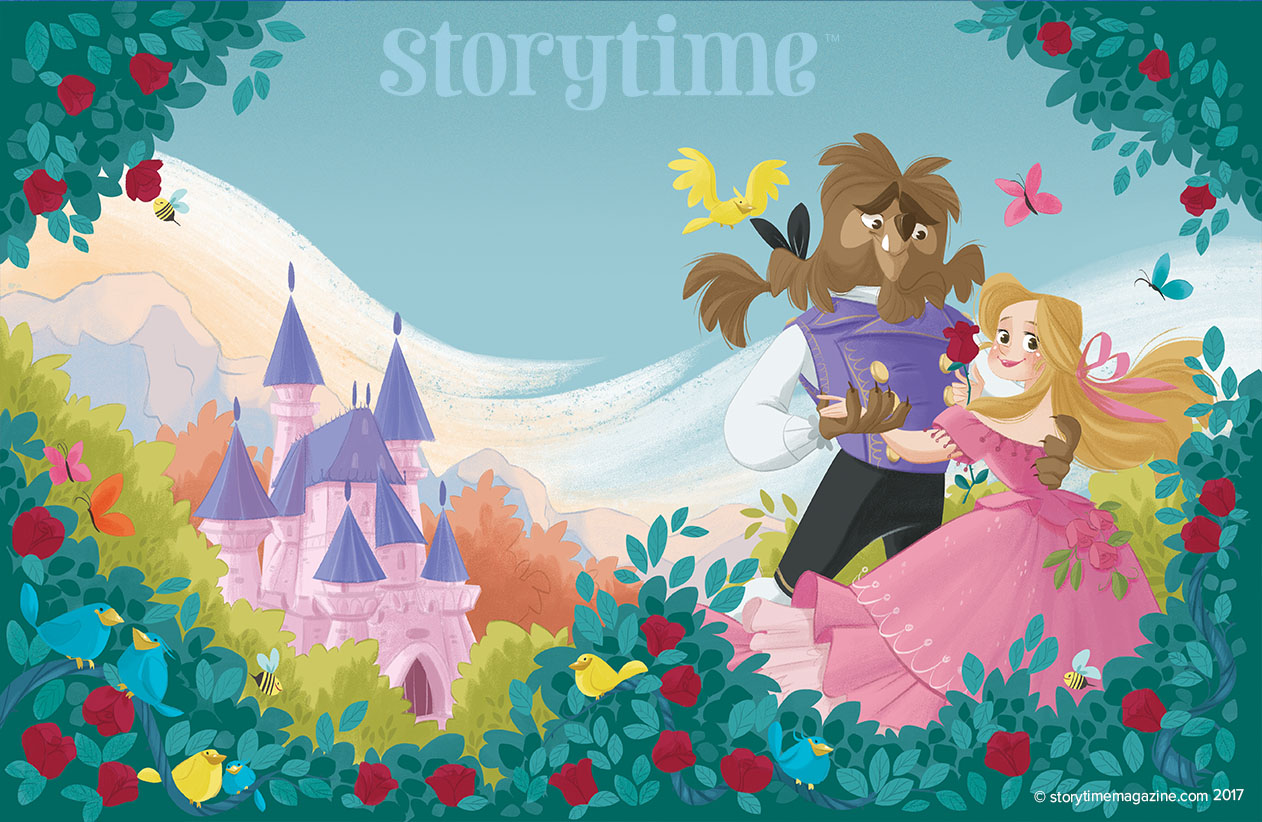
10 things you never knew about Beauty and the Beast, storytime magazine, magazine subscriptions for kidsYou probably haven’t been able to avoid the excitement surrounding Disney’s new Beauty and the Beast, starring Emma Watson. But what do you know of the original story that inspired it?

Like most famous fairy tales given the Disney treatment, it’s hard to imagine that it had a life before Hollywood. Not least a life without singing clocks, candlesticks, teapots, bad guys like Gaston and 3D animation.

But the original story (a version of which is in our latest issue of Storytime) is a different beast indeed. For fairytale fans everywhere, here are 10 things you never knew about Beauty and the Beast.

10 Things You Never Knew about Beauty and the Beast


Beauty and the Beast, Storytime magazine, kids magazine subscriptions

Beauty and her magic mirror in Storytime Issue 31. Illustration by Letizia Rizzo.

1. The original printed version of Beauty and the Beast is credited to a French writer called Gabrielle-Suzanne Barbot de Villeneuve. She included it in a 1740 story collection called The Young American or Tales of the Sea. She claimed that a chambermaid told it to a young lady, while on board a ship to America.

2. Villeneuve’s telling is over one hundred pages long. In it, Beauty is the daughter of a king and a wicked fairy – the very same fairy who turns the prince into a dumb and pitiful Beast.

3. A highlight of Villeneuve’s version include Beauty chatting with birds. She also dreams every night of a dashing prince (who is actually the Beast). Even better, she is able to watch any theatrical performance of her choice through a magic mirror. As this version is from 1740, that’s a pretty cool concept. A wise fairy also visited her in her in dreams.

4. Villeneuve might be most famous for Beauty and the Beast, but in her lifetime, she was best known for her novels. Interestingly, her own story is one of riches to rags. Sadly, she married a man who wasted her family’s fortune and she was widowed at the age of 26. It’s thought she found love later in life with a Parisian playwright.

5. Villeneuve’s story didn’t stay the course. Jeanne-Marie Leprince de Beaumont rewrote it several years later, creating the adaptation we know best today. She also got rid of the rather long ending. Beaumont wrote the story for governesses to share with gifted young girls.

6. In Beaumont’s version, a fairy turns the two mean sisters into statues at the end – statues that are conscious. “You shall stand before your sister’s palace gate, and be it your punishment to behold her happiness; and it will not be in your power to return to your former state, until you own your faults, but I am very much afraid that you will always remain statues,” says the fairy.

7. Neither of the two versions above actually describe how Beast looks, other than saying he is ugly, furry, fierce and frightful. The Beast we imagine today is the creation of clever illustrators, animators and special effects supremos.

8. Anthropologists believe the story is actually over 4,000 years old. Indeed, elements of Beauty and the Beast appear in tales from many different cultures. In Cupid and Psyche (Storytime Issue 17) – a myth from Ancient Rome – Psyche is transported to a magical palace, where she is served by invisible servants and not allowed to see Cupid’s true form. In East of the Sun, West of the Moon (Storytime Issue 2) – an old Norwegian fairy tale – a young girl is taken to a castle hidden in a mountain, served by invisible servants and not allowed to see the bear by night. Also, in The Singing, Springing Lark from the Brothers Grimm, the enchanted prince is disguised as a lion. Perhaps Cupid and Psyche inspired Villeneuve’s tale.

9. Disney weren’t the first to make a Beauty and the Beast film. That accolade belongs to French director, Jean Cocteau, whose 1946 movie is considered to be a romantic, fantasy classic.

10. For some reason, the original French title, La Belle et la Bete, sounds so much more “fairy tale” than Beauty and the Beast, don’t you think?


I love delving into the origins of well-known fairy tales and can’t help thinking there’s an interesting story to be told about Ms Villeneuve. I wonder whether she ever met Beaumont, who was 26 years her junior? Furthermore, what would she have thought of Beaumont’s adaptation? And what would they both think of Disney’s latest reimagining of the story? Would they approve? What do you think?

The story may well be thousands of years old, but like the Brothers Grimm, you have to admire Villeneuve for getting it down on paper and ensuring it would never be forgotten.


Long live fairy tales!


Inspiring Courage in Kids

kids magazine subscriptions, magazine subscriptions for kids, courage in kids, emperor's new clothesOne of the reasons we place so much value on stories at Storytime is because they inspire so many important and positive reactions in children – curiosity, wonder, inspiration, understanding, empathy and courage. These last two are so crucial right now.

The Most Courageous Kid of All

The Emperor’s New Clothes in our latest issue, Storytime 30, is a brilliant story for inspiring courage in kids, because the real star of the story is not the vain and proud emperor, or the pandering fools around him, or even the tricksters who better him, it’s the small boy in the crowd who’s the only person brave enough to stand up and say, “But he hasn’t got anything on!”

In this case, courage isn’t about wielding a sword and slaying dragons, it’s about having the heart and the nerve to stand up and say what you truly believe in when everyone around you is saying the opposite thing. In The Emperor’s New Clothes, only a child is bold enough to point out the glaringly obvious and embarrassing truth.

This child is probably my favourite in all of the fairy tales we’ve featured so far and, I think, he’s a character that kids can readily identify with. Perhaps adults too – wouldn’t we all like to think we’d be this child in the same situation? (Wait‚ aren’t we in a similar situation right now?)

Tact and good manners are all well and good, but I often wonder whether they’re sometimes at the cost of honesty and courage.

Questions of Courage

I think it’s a pity the child is such a minor character in the story and he’s definitely worth exploring some more. Here are some questions you could consider with your child:

  • Why do you think the boy said what he did?
  • Do you think he was right to say it?
  • What happened to the boy after the emperor’s parade?
  • What did he become when he grew up?

You could even write your own stories about his adventures – and give him a name. He deserves a name.

More Courageous Kids

And while we’re on the subject of courage, here are some more gutsy kids who can teach us some lessons in fearlessness.


Courage in kids, kids magazine subscriptions, magazine subscriptions for kids, best bedtime stories for kids

Gerda is undeterred by the icy Snow Queen. Art by Valeria doCampo.

1. Gerda in The Snow Queen This little girl sets off on her own, undertakes an epic journey, overcomes a brutal band of robbers and remains undaunted by the icy Snow Queen – all to save her best friend. An inspiration. (Storytime Issue 4)

2. Alice in Wonderland In a surreal and sometimes threatening new world, Alice gives the ridiculous and the unjust short shrift and says what she thinks. (Storytime Issue 1)

3. Hansel and Gretel Hansel has the audacity to trick the cannibalistic witch with a skinny chicken bone when she comes to see how well he’s fattening up, and Gretel gives the witch the big heave-ho into the oven. (Storytime issue 13)

4. The girl in Baba Yaga We named her Irina in Storytime. When Irina’s brother is abducted by Baba Yaga’s black geese, she goes on a mission to save him from Baba Yaga’s scary hut, which stands on chicken legs in the middle of the deep, dark forest. (Storytime Issue 26)


All of these stories are good examples of plucky and daring characters who might, in turn, inspire self-belief and courage in kids. Attributes definitely worth having at the moment. And there are many, many more amazing courageous kids in books, so perhaps the most heroic thing you could do this week is take a trip of the library…

Which courageous literary characters inspired you as a child? Let me know, I’d love to hear from you over on Twitter or Facebook. Hope you like the art for The Emperor’s New Clothes – top of page – it’s by the talented Tel Coelho.

Until next time!


Diversity in Stories

Storytime29_Diversity in StoriesIn 2016, the campaign for diversity in stories and publishing was at the fore – and it was a rallying cry for diversity at all levels. Not just in the stories we tell and how they are illustrated, but in the people who produce them.

Since we launched Storytime we have been trying to do our own small part to support diversity (otherwise known as the real world… normality?) in stories wherever we can. Here are some of the things we’ve been doing and things we’re still working at:


storytime Magazine, kids magazine subscriptions, magazine subscriptions for kids, diversity in stories

A Maui story from New Zealand, illustrated by Alexandra Huard.

    • Using illustrators from all over the world. In the last few issues, we have worked with illustrators from the UK, Serbia, Argentina, Spain, Mexico, Italy, Vietnam, Russia, Brazil, Colombia – and so many more. The most important thing to us is that an illustrator is the right person to help us bring a particular story to life. We would never choose or reject an illustrator because of their ethnicity, appearance, gender, religious beliefs, sexuality or disability. Only talent, style and skill are relevant.


    • Including an Around the World Tale in every issue. We’ve featured stories from far-flung places and varied cultures, from distant shores and more familiar destinations. We’ve packed our bags and armchair-travelled to Morocco, New Zealand, Siberia, India, Korea, West Africa, Nepal, the Caribbean, Malaysia, Patagonia… so many adventures!

Some of these stories feature animals, some feature people, some explore cultural likenesses and differences, and most demonstrate how universal wisdom, kindness, wit and humour can be. And they show what a small planet we really live on. We’ll keep on featuring global stories illustrated with diverse characters because, aside from being a great way to support diversity in stories, the tales themselves deserve to be shared. This is what Storytime is all about.


kids magazine subscriptions, diversity in stories, diverse characters

Wolf Lullaby – a tale from the Caribbean, with art by Emily Monjaraz.

    • Endeavouring to make diverse characters the norm. This is something we’ve tried to do from the start and, I’ll be honest, we need to work on some more. As much of our magazine is taken up with old folk tales and fairy tales of Western European origin, it’s often the default setting to make the characters look Western European (circa 1700) too. When the DNA of a story is old Celtic, for instance, it’s hard to argue with that. We want to be true to the origin and history of the stories, but we want to show more diversity too. It’s a challenge.To create more balance across a magazine, we make sure that characters of diverse racial backgrounds star in our poems and stories where the origin isn’t so specific (as well as in our World Tales). We also try to be diverse in subtle ways. Why can’t some of the fairies in this scene be black or Asian? Why does this little girl have to be Caucasian? We’ll keep asking these kinds of questions (and not just in relation to skin colour) and challenging ourselves with every issue. And we promise we’ll endeavour to ensure there is more diversity in our stories.When we created our new Alphabet Zoo poetry series (in Storytime Issue 29), we wanted one of the children who owns the zoo, Boo, to have a wheelchair. Why? Why not? Child readers don’t tend to question that kind of thing, so why should we?


kids magazine subscriptions, magazine subscriptions for kids, diversity in stories, storytime magazine

A Moroccan storyteller and the star of Gazelle Girl. Art by Marine Gosselin.

  • Improving the gender balance. I’ve talked about this before, but we’ve been on a subtle mission to sort out this ridiculous gender in stories thing since day one. You might wonder what I mean, but if you’d researched and read as many stories as I have, you’d get it. In a nutshell, females rarely exist in old stories and when they do, they’re often nags, hags, whimpering princesses, evil stepmothers, jealous stepsisters, helpless mothers or conniving queens. Men generally get a better deal, but don’t get away with it completely, often cast as the simpleton or put-upon husband. And it must be so exhausting to have to be the hero all the time. I won’t completely rewrite classics, as I know it’s not what our readers want, but I do make changes where I can. I’ll make the princess a little less nauseating and more independent or less defined by her appearance. I might make the simpleton less stupid or help his character to grow. I’ll have daddy bear make the porridge instead of mummy, ask for a boy to be shown playing with a doll, and I’ll make strong animal characters female instead of male (they’re so often male) and a caring, nurturing animal character male (which rarely happens in the originals). I don’t do it for every story, just where it’s needed most. It’s a stealth approach to challenging stereotypes and we’ll keep at it.

So diversity in stories. We’re trying hard and we can try even harder. For a start, we need to feature more diverse books in our book recommendations. We’ll do this because it matters. It’s important that people of all backgrounds, cultures, beliefs and abilities see themselves represented in the media. It makes us a better, more understanding and compassionate world, don’t you agree?

I hope the cry for diversity is as loud, if not even louder, in 2017.

Best wishes to you whoever and wherever you are!


Storytime Issue 28 – Out Now!

Kids magazine subscriptions, magazine subscriptions for kids, storytime issue 28, storytime magazine, stories for kidsOur lovely latest issue – Storytime Issue 28 – with a striking Selfish Giant cover got a little lost in the Christmas kerfuffle. I feel I may have done it a disservice by not shouting about it more, so I hope this blog post makes up for it.

kids magazine subscriptions, fairy cakes, storytime magazine

Flying fairy cat by Benedetta Capriotti in Storytime Issue 28

A traditional Celtic folk tale called Fairy Cakes leads Storytime Issue 28. It’s a gentle story, ideal for any child who is unnerved by tales with terrible baddies. And it features cake! Plus Benadetta Capriotti illustrated the best fairy-powered flying cat ever!

For laughs, in our Famous Fables section, we have Donkey Do, Donkey Don’t. Almost every culture has a version of this moral tale, so its message clearly has wide appeal. It’s deftly illustrated by Mike Moran, and we love the donkey’s comical expressions.

The Maiden and the Moon is a tale from snowy Siberia. It features a talented musician, the moon who falls in love with her and the magical reindeer who helps her escape the moon’s clutches. It’s a great introduction to Chukchi culture, and Kadi Fedoruk provided wonderful illustrations with gorgeous colours.


We’re very lucky to have George Ermos illustrating for us again. He previously illustrated The Boy Who Cried Wolf in Storytime Issue 14. This time round, he has brought the classic fairytale, The Fussy Princess, to life. There are versions of this story all over Europe, including Shakespeare’s Taming the Shrew. This was a tricky tale to tackle but, hopefully, we’ve given it the Storytime treatment and toned down any out-moded messages in the original.

We also feature Jack Frost – a poem by Gabriel Setoun. Imaginative, magical, and a great explanation of where Jack Frost finds his inspiration. David Pavon‘s illustrations are great fun.


kids magazine subscriptions, storytime magazine, storytime issue 28, selfish giant, oscar wilde

The Selfish Giant sees the error of his ways in Storytime Issue 28. Art by Sebastia Serra

We love an Arthurian legend and, having featured The Sword in the Stone in Storytime Issue 13, now seemed the right moment for Arthur to win Excalibur. The Lady of the Lake features another wonderful take on Merlin too. Plus an ethereal but child-friendly Nimue in Pablo Pino‘s illustrations.

Finally, that brings us to The Selfish Giant by Oscar Wilde. Unlike our usual extracts in Brilliant Books, readers get the whole story. It’s every bit as heart-warming and life-affirming as a winter story should be. Sebastia Serra (who also illustrated Sinbad’s First Voyage in Storytime Issue 17) provided the artwork.

All this plus our usual free downloads, resource packs and lesson ideas for schools. There are also puzzles, drawing, an awesome game, book recommendations and a fairy cake recipe for fairy bakers everywhere!

Traditionally, our Storytime Christmas issue came out in November. Originally, this was to follow suit with other magazines in the retail space. However, as we no longer have to comply with these strange rules, from 2017, the Christmas issue will land in December. When we’re all good and ready to face the festive season! An additional benefit is we’ll no longer have a December issue that doesn’t get enough fuss in the festive fun – hurrah to that!

I hope you’re enjoying Storytime issue 28. If you’ve only just subscribed and missed it, you can pick it up from our back issue shop. It’s well worth a read!

Happy New Year to you all! There are super stories and amazing adventures ahead!